



Facelift

New York, NY

Introduction to Facelift in New York City

A facelift in New York City is a surgical or non-surgical facial rejuvenation treatment designed to restore youthful facial contours by lifting and repositioning the deeper tissues of the face and neck. As we age, gravity, volume loss, and changes in skin elasticity create visible signs such as jowls, deeper facial folds, loose neck skin, sagging skin, and a loss of jawline definition.

For people in New York City who want to address these changes with natural-looking, long-lasting improvement, the practice of Dr. Michelle Copeland and Dr. Libby Copeland-Halperin offers advanced facelift techniques including mini, full, deep plane, and liquid facelifts, with each treatment plan tailored to the patient’s anatomy, goals, and stage of facial aging.

This guide explains who is a good candidate, how each option differs, what surgery and recovery involve, when to combine a facelift with other procedures, what costs to expect, and why patients choose Dr. Copeland and Dr. Copeland-Halperin for personalized facial rejuvenation.

procedure-whatis

What is a Facelift?

A facelift is a facial rejuvenation procedure that restores youthful definition by lifting and repositioning the deeper facial tissues rather than simply tightening the skin. Modern facelift techniques focus on correcting jowls, loose neck skin, deep facial folds, and loss of facial volume while preserving your natural facial expressions.

The facial rejuvenation process is designed to restore youthful balance and structure by lifting and supporting facial tissues, addressing signs of aging for a more harmonious look. Dr. Copeland and Dr. Copeland-Halperin may also use your own fat to help recontour and rejuvenate the face with a technique known as autologous (meaning “your own”) fat transfer.

Given the various types of facelifts available, experienced facelift surgeons Dr. Michelle Copeland and Dr. Libby Copeland-Halperin evaluate each patient to help them navigate the differences and select the most appropriate procedure to help them meet their goals, emphasizing the importance of choosing the right facelift technique for optimal results.

Deep Plane Facelift

The deep plane facelift technique is a surgical technique (also known as the deep plane facelift procedure or deep plane facelift surgery) that repositions the deeper layers of facial tissue beneath the SMAS (superficial musculoaponeurotic system) for more dramatic rejuvenation. An extended deep plane facelift is a more comprehensive variation that lifts deeper facial structures and the neck to create natural, long-lasting rejuvenation. Compared with a traditional facelift, its deeper release and repositioning typically provide longer-lasting results while avoiding an overly tight appearance.

The deep plane facelift is often recommended for patients with more advanced facial aging, including pronounced jowls, deeper nasolabial folds, and significant tissue descent in the cheeks, midface, jawline, and neck, and it also allows the surgeon to address the neck muscles as part of comprehensive face-and-neck rejuvenation. Because the deeper facial structures are repositioned rather than simply tightening the skin, the results often appear softer, more natural, and longer lasting while preserving normal facial movement.

Mini-Facelift or Lower Facelift

Mini facelift surgery recontours the lower face from the cheek to the chin, addressing loose skin. Skin and underlying tissue are lifted to eliminate jowls and effectively redefine the cheekbones. Shorter scars and quicker recovery make this procedure very appealing. The best candidates for the mini-lift are those who are unhappy with the contour of their lower face and neck.

Mini facelift surgery is often recommended for patients with early signs of facial aging who want to improve definition along the lower face and jawline, with smaller incisions and a shorter recovery. It is often ideal for younger facelift patients with early signs of jowling and limited lower-face sagging. Because the procedure focuses on the lower face using smaller incisions, many patients experience a shorter recovery while still achieving meaningful, natural-looking rejuvenation. A midface lift is a different procedure used when the primary concern is cheek descent rather than the jawline.

Full Facelift

This procedure involves elevating and repositioning the deeper layers of your face beneath the skin, then redraping and removing excess skin to improve facial and neck contour. The final result looks more natural than the older “plastic tight” or “wind-blown” looking facelifts. This is a facelift chosen by someone looking for a bigger change than a mini-facelift.

A full facelift is ideal for patients with more advanced facial aging who would benefit from comprehensive rejuvenation of the cheeks, jawline, and neck, especially when sagging jowls are a key concern. By addressing multiple areas during a single procedure, Dr. Michelle Copeland and Dr. Libby Copeland-Halperin can restore smoother facial contours while better supporting the face’s underlying bone structure and maintaining your natural facial character. Every surgical plan is customized to create balanced, refreshed results rather than an overly tightened appearance.

Liquid Facelift

Advanced techniques gently lift and contour facial features without surgery and little downtime. Fillers such as Juvederm, Voluma, Volbella, Radiesse, Sculptra, and even your own fat can lift your skin and recontour your face, restoring a more youthful appearance. Lips that are thin with aging can be made plumper, and fine lines around the lips can be reduced. Other minimally invasive procedures, such as laser skin resurfacing and an endoscopic brow lift, can also be combined with a liquid facelift to enhance facial rejuvenation further and achieve a refreshed appearance.

A liquid facelift is often an excellent option for patients with mild to moderate signs of facial aging who want noticeable improvement without surgery or significant downtime. While injectable treatments can restore volume, soften wrinkles, and improve facial contours, they cannot correct significant skin laxity or tissue descent.

In addition to dermal fillers, a liquid facelift may include Thermage® or microRF microneedling, non-invasive treatments that use radiofrequency technology to tighten skin, renew facial contours, and stimulate your body to make healthier collagen. This building block provides structure to your skin. Thermage and microRF provide immediate results that continue to improve over time.

What Sets Dr. Copeland and Dr. Copeland-Halperin Apart as the Premier Facelift Practice in New York City?

  • A Collaborative Mother-Daughter Surgical Team: With decades of combined experience in facial plastic surgery, Dr. Michelle Copeland and Dr. Libby Copeland-Halperin combine artistic judgment with advanced surgical techniques and deep expertise in facial aesthetics tailored to each patient’s unique anatomy.
  • Exceptional Training and Surgical Expertise: Dr. Michelle Copeland’s dual Harvard degrees in medicine and dentistry, combined with Dr. Libby Copeland-Halperin’s advanced surgical training spanning aesthetic and reconstructive surgery, provide a comprehensive understanding of facial anatomy and aesthetic balance.
  • Natural-Looking Facial Rejuvenation: Every facelift is designed to restore youthful definition without creating an overly tight or unnatural appearance. The focus is on helping patients look refreshed, rested, and like themselves.
  • Personalized Surgical Planning: No two faces age the same way. Dr. Michelle Copeland and Dr. Libby Copeland-Halperin carefully evaluate each patient’s skin quality, facial structure, and long-term goals to recommend the facelift technique that will provide the most balanced result.
  • Comprehensive Care From Consultation Through Recovery: From your initial consultation to your final follow-up appointment, our team provides attentive, concierge-style care, detailed recovery guidance, and ongoing support to help make your surgical experience as comfortable as possible.
necklift-what

Facelift Quick Facts

  • Surgery Time: Approximately 3–5 hours, depending on the facelift technique and whether additional facial procedures are performed.
  • Price: Customized based on your surgical plan and whether additional facial rejuvenation procedures are performed.
  • Recovery: Most patients return to light daily activities within 2–3 weeks, while swelling continues to improve over several months.
  • Results: Initial improvements are visible immediately, with final facial contours continuing to refine over 6–12 months.

What Are the Benefits Of A Facelift?

Every patient’s reasons for pursuing a facelift are different. Some want to restore definition along the jawline, while others hope to address deeper facial folds, loose neck skin, or sagging cheeks that have developed over time. Depending on your anatomy and personalized surgical plan, a facelift may provide benefits such as:

  • Restoring youthful facial contours while preserving your natural appearance
  • Improving jawline definition and reducing the appearance of jowls
  • Softening deep folds and facial creases that develop with age
  • Lifting sagging cheeks to restore better facial balance
  • Creating a smoother, firmer neck contour
  • Repositioning deeper facial tissues rather than simply tightening the skin
  • Producing long-lasting rejuvenation with results that continue to refine over time
  • Improving confidence by helping your outward appearance better reflect how you feel

Who Are the Best Candidates For A Facelift?

A facelift is a highly individualized procedure designed to restore youthful facial definition while maintaining your natural facial character. During your consultation, Dr. Michelle Copeland and Dr. Libby Copeland-Halperin will evaluate your facial anatomy, skin quality, and aesthetic goals to determine whether facelift surgery is right for you.

You may be a good candidate if you:

  • Notice jowls or sagging along the jawline
  • Have loose skin beneath the chin or around the neck
  • Are bothered by deep folds around the nose and mouth
  • Have experienced age-related volume loss or facial descent
  • Are in good overall physical health
  • Do not smoke or are willing to stop before surgery
  • Have realistic expectations about what facelift surgery can accomplish

How to Begin Your Facelift Journey

Every successful facelift begins with a thoughtful, one-on-one personal consultation. During your visit, Dr. Michelle Copeland or Dr. Libby Copeland-Halperin will spend time understanding what changes you’ve noticed, what you’d like to improve, and the type of result you’re hoping to achieve. Rather than recommending the same procedure for every patient, they carefully evaluate your facial anatomy, skin quality, volume loss, and degree of tissue descent to determine which facelift approach will best achieve your goals.

Once your evaluation is complete, our team of facial rejuvenation surgeons will explain the differences among the available facelift techniques, discuss the advantages of each option, and guide you in developing a personalized treatment plan. If another facial procedure, such as a neck lift, eyelid lift, brow lift, or fat transfer, would help achieve a more balanced outcome, those recommendations will also be reviewed so you have a complete understanding of your options.


If you decide to move forward, you’ll receive a customized treatment plan, a detailed written quote, and guidance from our Patient Coordinator to schedule your procedure. Before surgery, our nursing team will review your personalized pre-operative instructions, answer any remaining questions, and help ensure you feel informed, prepared, and confident before the day of your facelift.

jawline-reshaping-what

How Do I Prepare for My Facelift?

Preparation begins weeks before surgery. Here’s how to set yourself up for a safe, smooth procedure and recovery:

  • Medical Clearance: Depending on your age and health status, pre-operative lab work or clearance from your primary care physician may be required.
  • Stop Smoking: Avoid nicotine products at least four weeks before and after surgery to ensure proper healing.
  • Medications: You may be asked to pause blood-thinning medications, including aspirin, ibuprofen, and certain supplements like fish oil or vitamin E.
  • Skin Prep: Healthy skin helps optimize your surgical results and healing, which is one of the reasons Dr. Copeland was among the first women plastic surgeons to develop her own skin care line, drawing on her background in biochemistry. Dr. Copeland and Dr. Copeland-Halperin take a holistic approach to patient care and will recommend a customized skin care program for you, as needed, to improve skin texture and hydration.
  • Support System: Arrange for a responsible adult to drive you home after surgery and help you during the first 24–48 hours post-op. Our office will also arrange a private nurse to stay with you following surgery.

Our nursing staff will provide you with detailed instructions and a checklist during your pre-operative appointment.

What to Expect on the Day of Facelift Surgery

On the day of your facelift procedure at the practice of Dr. Michelle Copeland and Dr. Libby Copeland-Halperin, you will be greeted by your staffed surgical team, including our board-certified anesthesiologist. You will settle into our private, discreet, state-of-the-art surgical suite, and we will review your surgical plan if you have any further questions. It is important to us that our patients are fully at ease before going into surgery.

Finally, a board-certified anesthesiologist will administer “twilight anesthesia,” which provides complete comfort and enables patients to wake up quickly with a lower risk of side effects, although general anesthesia may be recommended in select cases based on the surgical plan and patient needs.

Once you are sedated, your surgeon will place incisions to minimize scarring and then reposition the elements of your facial anatomy.  Once your aesthetic goals are met, the surgeon will close the incisions with sutures to create minimal scarring.

After your surgery, a compression dressing will be gently applied to protect the incisions and prevent fluid from collecting.

Combining My Facelift with Other Procedures

A facelift is often combined with other facial rejuvenation procedures when a patient wants more comprehensive results. Common combinations include a full facelift with a neck lift and, in some cases, complementary facial surgery to address additional areas of concern in a single treatment plan.

Neck Lift

A facelift restores youthful definition to the face, but it does not always fully address loose skin, muscle banding, or excess fullness beneath the chin. Combining a facelift with a neck lift allows Dr. Michelle Copeland and Dr. Libby Copeland-Halperin to rejuvenate the lower face and neck simultaneously, creating a smoother jawline, firmer neck contour, and more balanced overall facial appearance. Treating both areas together often produces the most natural and harmonious long-term results.

Brow Lift

A facelift primarily rejuvenates the midface, jawline, and neck, while a brow lift focuses on the upper face. Patients who are bothered by drooping eyebrows, forehead creases, or a tired appearance around the eyes often benefit from combining these procedures. Addressing the upper and lower face together creates more complete facial rejuvenation while maintaining natural facial expression and balance.

Eyelid Surgery

Loose eyelid skin and under-eye bags can continue to make patients appear tired, even after the lower face has been rejuvenated. Combining a facelift with an eyelid lift (blepharoplasty) or upper- and lower-eyelid surgery helps refresh the eyes while restoring youthful facial contours. By treating multiple signs of facial aging during the same procedure, Dr. Michelle Copeland and Dr. Libby Copeland-Halperin can achieve more comprehensive, natural-looking results with a single recovery period.

Fat Transfer

Facelift surgery restores youthful facial position, but it does not replace volume that has been lost with age. Fat transfer uses your own purified fat to restore fullness to areas such as the cheeks, temples, or under-eye region, creating smoother facial transitions and softer contours. When combined with a facelift, fat grafting enhances overall facial harmony while providing long-lasting, natural-looking volume restoration.

Rhinoplasty

Although rhinoplasty and facelift surgery address different concerns, they can complement one another for patients seeking more comprehensive facial harmony. Refining the nose while rejuvenating the face and neck creates balanced proportions and helps ensure that one feature does not draw attention away from the others. During your consultation, Dr. Michelle Copeland and Dr. Libby Copeland-Halperin will determine whether combining these procedures is appropriate based on your anatomy, goals, and overall health.

Your guide to post-facelift care

Facelift Recovery

Recovery is a gradual process, with noticeable improvements occurring week by week as swelling resolves and your facial tissues settle into their new position. While everyone heals at a different pace, most patients begin feeling more like themselves within the first few weeks, with continued refinement of their facial contours over the following months.

Your first follow-up appointment is typically scheduled for the day after surgery so Dr. Michelle Copeland or Dr. Libby Copeland-Halperin can evaluate your initial healing and answer any questions. Additional visits are scheduled throughout your recovery to monitor your progress, remove sutures when appropriate, and ensure you’re healing as expected.


An important part of our post-operative care is specialized lymphatic massage, which is included with your surgical treatment. Performed by licensed massage therapists trained in post-surgical lymphatic drainage techniques, these treatments help promote healthy healing, reduce swelling, and support a smoother recovery. Throughout your recovery, our team remains available to provide guidance and support as your results continue to develop.

eyelid-surgery-what

7 Tips for Recovery

Recovery after a facelift occurs in stages. Swelling and bruising are most noticeable during the first one to two weeks, then steadily improve. As healing continues, facial contours become more refined, and the tissues settle naturally into their new position over the following months.

Recovering from a facelift is a process—here are seven key tips to ensure smooth healing:

  1. Sleep with your head elevated for the first 1–2 weeks to reduce swelling.
  2. Use cold compresses for the first 48 hours to minimize bruising.
  3. Take short, gentle walks to support circulation.
  4. Avoid strenuous activity for at least 4–6 weeks, or until cleared by your surgeon.
  5. Stay hydrated and eat nutrient-rich foods to support healing.
  6. Avoid smoking and alcohol during the recovery period, as they delay healing and increase the risk of wound healing problems.
  7. Attend all scheduled follow-ups to ensure you’re healing properly and to address any questions.

Please remember that healing is a gradual process. Some swelling, numbness, or tightness is expected in the early weeks. Final results can take several months to reveal themselves fully.

mask

Patient Spotlight

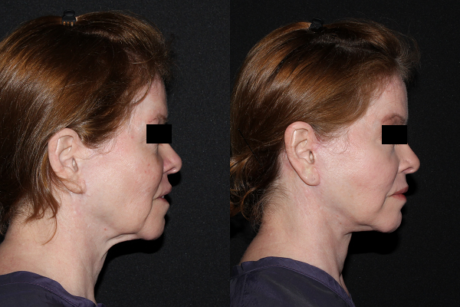
59-year-old, 6 months post-facelift 

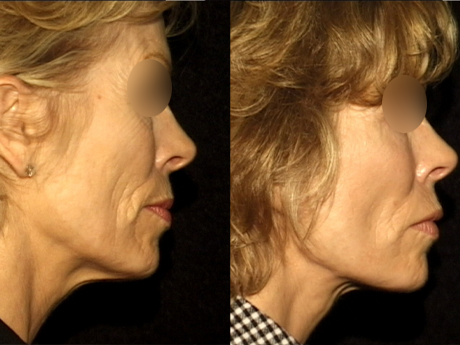
Bothered by sagging skin and a loss of definition along her lower face, this patient booked a consultation with Dr. Michelle Copeland at her private Fifth Avenue practice. During their conversation, Dr. Copeland walked her through her options, the recovery timeline, and what results she could realistically expect. Impressed by the natural-looking outcomes in the before-and-after gallery and by Dr. Copeland’s distinction as the first woman plastic surgeon to earn a Harvard doctorate in medicine and dentistry, she confidently scheduled her facelift.

On the day of surgery. Dr. Copeland performed the facelift under twilight anesthesia, using a minimal scar approach. With attentive follow-up care from Dr. Copeland and her team, which included a lymphatic massage and application of Dr. Copeland’s medical-grade skin care products, the patient healed smoothly and was delighted to hear friends remark on how refreshed she looked, never suspecting she’d had surgery.

Long-Term Results of a Facelift

A facelift is designed to provide long-lasting facial rejuvenation by repositioning the deeper tissues of the face rather than simply tightening the skin. While the natural aging process continues, patients typically look younger than they would without surgery because their facial structures have been restored to a more youthful position. As swelling fully resolves and the tissues settle, your results will continue to refine over the course of six to twelve months.

Maintaining your results involves more than the surgery itself. A consistent skincare routine, diligent sun protection, a stable weight, and healthy lifestyle habits can all help preserve your rejuvenated appearance. Many patients also choose to complement their facelift with non-surgical treatments such as neuromodulators, dermal fillers, laser skin resurfacing, or radiofrequency-based skin tightening to address ongoing changes in skin quality and facial volume. During your follow-up visits, Dr. Michelle Copeland and Dr. Libby Copeland-Halperin can recommend a personalized maintenance plan to help you enjoy your refreshed appearance for many years.

procedure-cost

How Much Does a Facelift Cost In New York City, NY?

Because every facelift is tailored to the individual, the cost varies based on the surgical technique recommended, the complexity of your procedure, and whether additional facial rejuvenation treatments are performed at the same time. During your consultation, Dr. Michelle Copeland or Dr. Libby Copeland-Halperin will develop a personalized surgical plan and provide you with a detailed written quote outlining your procedure. Our team can also discuss available financing options to help make treatment fit your needs.

You may also discuss financing options from resources such as CareCredit and PatientFi at your consultation.

procedure-choose-v2

Why Choose Dr. Michelle Copeland and Dr. Libby Copeland-Halperin?

Dr. Michelle Copeland and Dr. Libby Copeland-Halperin bring a wealth of medical accomplishments and expertise and are known for their empathy and kindness towards their patients and holistic approach to patient care. Dr. Michelle Copeland is the first woman plastic surgeon with a Harvard doctorate in Medicine and Dentistry and is a published author. She is an Assistant Clinical Professor of Surgery at the Icahn School of Medicine at Mount Sinai and an attending surgeon at the Mount Sinai Medical Center.

Dr. Libby Copeland-Halperin joined Dr. Copeland in one of the nation’s few mother-daughter plastic surgery practices. She is double board-certified in general surgery and plastic surgery and completed advanced training in microsurgery at the Brigham and Women’s Hospital with a focus on breast surgery. She enjoys helping patients achieve their cosmetic surgery and reconstructive goals through a combination of surgical and non-surgical facial rejuvenation techniques.

Both doctors work with an international clientele, drawing patients from Asia, the Middle East, and Europe. Whether it’s a virtual consultation or an in-person one, they will answer all your questions, including options, costs, recovery, and all aspects of treatment for surgical and non-surgical procedures, such as BOTOX®, Kybella®, fillers, and other non-invasive techniques.

What Our Patients Are Saying

“I Have Gotten Rave Reviews!”

The outcome was truly spectacular. It has been 7 weeks since my facelift, and I have gotten rave reviews from everyone. It is so natural, that my friends (whom I did not tell beforehand) kept asking why I looked so refreshed, and younger. I just told them I have a new hairdo and Lost weight. The entire team, from the receptionist, the nurse manager, the anesthesiologist, and of course Dr. Copeland, were highly professional, accommodating, and sensitive.

The office has a very relaxed vibe, and the personnel is the same. I would highly recommend Dr, Copeland and her surgical team. Have already booked my second procedure and I am confident that the results will be just as wonderful.

“I Am So Happy”

I am so happy with the results Dr. Copeland gave me. When I look in the mirror, I am seeing exactly the person I want to see. Dr. Copeland was very thorough and everything went exactly as she said it would. I received great care from Dr. Copeland and her staff and my only regret is that I didn’t have this procedure a few years ago.

“ I love the way I look”

Thank you so much for the natural results you gave me. You really are an artist. Everyone is saying how well I look, but they can’t tell what I have had done. The few people who do know have said how wonderful I look. No one gets up on the bus to give me a seat anymore—which is okay. Even my husband has said how pleased he is.

I love the way I look. I look how I want to see myself when I look in the mirror. Before the surgery, it was so depressing. I didn’t recognize myself when I looked in the mirror. Who is this person I would ask. Now I look and feel so much better. Thank you. It’s everything I wanted. It has changed my life, really.

Mini-Facelift

I love the way I look. I look how I want to see myself when I look in the mirror. Before the surgery, it was so depressing. I didn’t recognize myself when I looked in the mirror. Who is this person I would ask. Now I look and feel so much better. Thank you. It’s everything I wanted. It has changed my life, really.

Facelift FAQs

Schedule Your Consultation

Contact us

If you are looking to turn back the hands of time on your face, consider learning more about a facelift with Dr. Michelle Copeland and Dr. Libby Copeland-Halperin. To schedule your initial consultation, please contact our office or fill out a consultation request form

Contact Us

Call Email Results